 Mission Zero
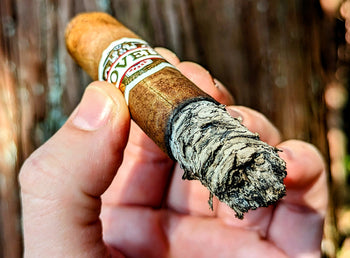
As the boutique cigar brand boxing and branding creativity war heats up, more and more clever bands and packaging are put into action. Hoping to catch the attention of cigar shoppers, they jostle for shelf space and attention on Instagram, as they float about in an ever-expanding sea of cigars.
Legacy brands don't need to worry so much about these sorts of things. Sure, they may have some snazzy higher-end sticks and some illustrious limited release smokes, but for everything core line related, they have industry clout and brand recognition on their side. Boring brown banding and basic marketing moves are more than enough to keep their sticks on shelves, and so they rest on their laurels, knowing that consumers will seek them out no matter what.
But for Oliva Cigars, much of its collection remains overshadowed by the immense popularity of its utterly sublime Melanio line. Despite rolling out a solid core line of well-built smokes with fantastic flavors and aromatics, the Nicaraguan powerhouse's portfolio rarely receives as much love on social media as its far more ornate upper line. Even cigars like the downright delicious breakfast blend known as the Oliva Gilberto Reserva Blanc seem to struggle to gain recognition online, with the unexciting-looking yet strikingly good Serie G Maduro being a secondary example.
Then there is the Oliva Serie G, which, in my opinion, is even more pedestrian-looking than any of the other cigars in the line. Cameroon-wrapped and Nicaraguan-filled, this natural alternative to the maduro version above received a 91-point rating at Cigar Aficionado in 2025. Like many of you, I had not smoked this blend in years, and merely remember liking it, but not to the point where it earned the cigar a semi-permanent place in my humidor restocking schedule. Which is precisely why we are giving this sleeper stogie a shakedown, for sometimes revisiting a core line from a legacy brand is just what we need.
Unlit Impressions

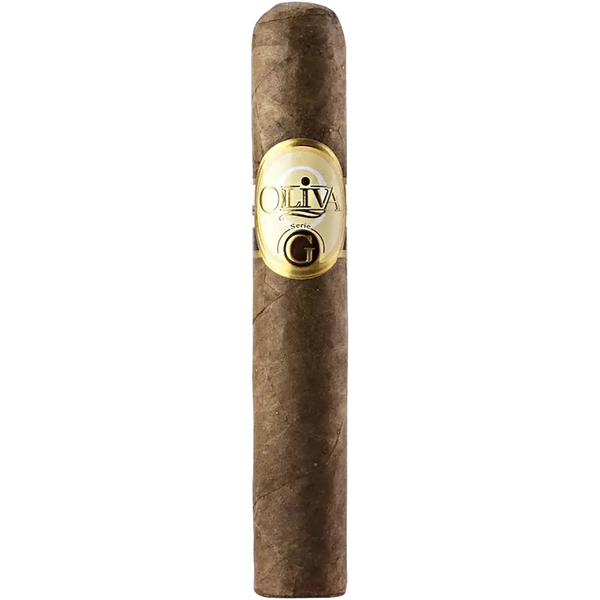
Like a dusty dirt road covered in chalky red clay, the Cameroon wrapper on the outside of my Churchill is about as exciting as the humble band down near the shoulder of the cigar. With zero oils to be seen and chlorophyll hot spots popping out in places, this smoke looks very different than Long Live the Queen from Caldwell. A stunner of a Cameroon that I reviewed about a week prior, which featured one of the best visual representations of what a Cameroon cigar can offer.
Aromas are respectable, with dry tea leaves, and that citrus sweetness we come to find in these kinds of blends being the most notable. This is followed by a sprinkle of nutmeg, but not much else, giving me cause to move down to the foot for more aroma.
While still not overly complex, the foot does release some more inspiring aromatics, with sweet hibiscus tea, dry cedar, mixed peppercorns, and a tart dried cherry and craisin combo being the top notes. Pleasant, but not very inspiring either.
Cold draws are much more grounded in an earthy sense of the word and offer some toasty notes to elevate the senses. But without any sweetness, the blending of roasted and raw cereal grains, generic nuts, white pepper, and muddy soil sits flat on the tongue, and there isn't much in the way of depth pre-light. Again, recognizable but not impressive, or all that memorable, just like that cigar band that promotes the product.
Both cigars smoked also had unsightly caps that were poorly applied and felt under-filled, with my review cigar having a large soft spot covering much of the first third and the foot.

Digging the Sound of This Cigar? You Might Also Like...
Aladino "Camp Aladino Cameroon Gorbusto"
La Aurora "1903 Cameroon"
AJ Fernandez "New World Cameroon"
Initial Smoke

Spicy, spiced, and most certainly salty, ignition is far more powerful than the unexciting, unlit impressions would have you believe. This gradually evolves into a savory Chex Mix medley, which is aided by a nice little herbal aromatic on retrohale that is difficult to place in regard to origin or herb strain. The draw is fluid to the point of being almost too open, and in no time, a nutty nougat mixture mixed with milk chocolate evolves, leaving you with an unsweetened Nutella taste in your mouth.
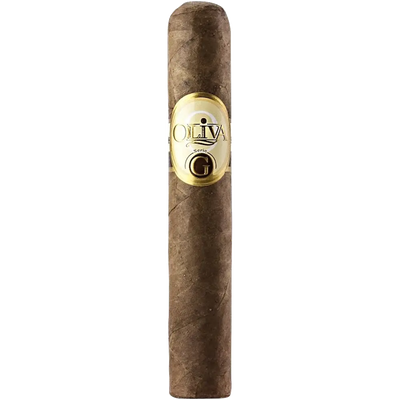
1st Half

Wholegrain Chex Mix notes gradually grow heartier and chewier, the blend slowly becomes creamier and nuttier, with a spicy, cedar-strong retrohale keeping the nostrils alight. Deeply fermented black tea is somewhat balanced by white tea tastes on the finish, which by now has reached a medium length, and the magnitude of the cigar flavor profile builds a fuzz. Roasted mixed nuts can still be tasted, but they taste a touch overly toasted, so there are some pops of bitterness in between. The draw remains wide open, so I smoke as slowly as possible to prevent overheating from occurring.
But as the second third ignites, the cigar starts to find its feet, and a basic but far more balanced vibe is detected. Tea tastes are smoother and stronger, and are working well alongside the spicy cedar notes within each retrohale. Brown sugar has also appeared, and when mixed with those nougat flavors and nuttiness, it smooths out any bitter moments, making for a much more satisfying finish, while bumping the body up to medium.
2nd Half

Nougat notes within the blend suddenly go dry somewhere toward the center of the stick, and the cigar takes on an even nuttier flavor profile. Fortunately, the bitterness has backed off, and this allows subtler tastes of star anise and dark stone fruit to flow in. Those tasty tea flavors have also faded, even though their tannins and textures remain, and as the retrohales relax, the smoke settles on a chalky earthen base.
From that point onward, the cigar does not evolve all that much in flavor, with the entirety of the final third being a repeat of the second, with moderate shifts in potency and dryness being the most notable changes.
Parting Puffs

Spice strong, with a bitter bite behind it, the last of this stick starts sharp and then turns into a cardboard and soil mish-mash. Retrohales may be clean and light, but the tongue does not detect much in the way of pleasantness, with an excessive amount of heat from that open draw forcing me to call it quits early on.
Ash / Burn / Smoke / Draw

That open draw and under-filled barrel didn't do my review cigar many favors. While the smoke that was pulled forth was nice enough in texture and medium in body from start to finish, performance problems persisted. Ash flaking was a problem on both sticks, as were uneven burn lines and drops, which created quite a mess each time. No touch-ups were implemented, though, so things didn't get too out of hand when it came to burn lines and overheating.
And while heat really wasn't an issue until the final third, the rapid combustion of the cigar did erase some points. There is no smoking slowly with this one, for doing so will only cause the cigar to go out. This means that you are forced to puff at a pace that, in turn, causes the blend to burn quickly, which, for many people, is undesirable in a cigar.
Final Thoughts
 Even though there were some combustion problems along the way and a closing section that was pretty much unpleasant, the center sections of this stick were tasty. There are plenty of traditional Cameroon tobacco flavors and aromas within to keep most people pleased, and the blend does a good job of keeping body and intensity well within the medium range.
Tea notes and the late addition of dried stone fruits were also very enjoyable, and the continuous build-up of nuttiness and tannins were all great. For as spicy as it was at times, those cedar top notes on retrohale in particular were also on point, and the center of the cigar was well-balanced and smooth.
But without much of an evolution in the final third to be found, and some unexciting, unlit impressions and a sharp-ish first third, there is something left to be desired with this blend. So while I will continue to enjoy and recommend the maduro version of this core line from Oliva, I view its natural alternative as more of a second-string option. A cigar that is good enough to be considered, but not impressive or balanced enough to be worthy of a first pick out of the humidor. Which reminds me, I still don't know how in the hell these two Churchills got into my humidor in the first place. Talk about first-world cigar smoker problems...

Stogie Specs
|
Cigar |
Oliva "Serie G" |
|
Wrapper |
Cameroon (Africa) |
|
Binder |
Nicaragua |
|
Filler |
Nicaragua |
|
Factory |
Nicaragua |
|
Size |
7″ x 50 (Box-Pressed Churchill) |
|
Strength |
Medium |
|
Pairing Drink |
Homemade Jamaican Mule |
|
Rating |
4.2/5 |
- Wrapper
- Cameroon (Africa)
- Binder
- Nicaragua
- Filler
- Nicaragua
- Origin
- Nicaragua
The ever-affordable Oliva "Serie G" is a medium-bodied cigar with traditional Cuban characteristics. This stick has a delicious Cameroon wrapper out of Africa, and a core of matured Nicaraguan long fillers placed inside a Cuban-seed binder. The smoke has rich aromas of coffee, spice, cedar, and nuts that you will want to retrohale whenever possible.